-
 In depth
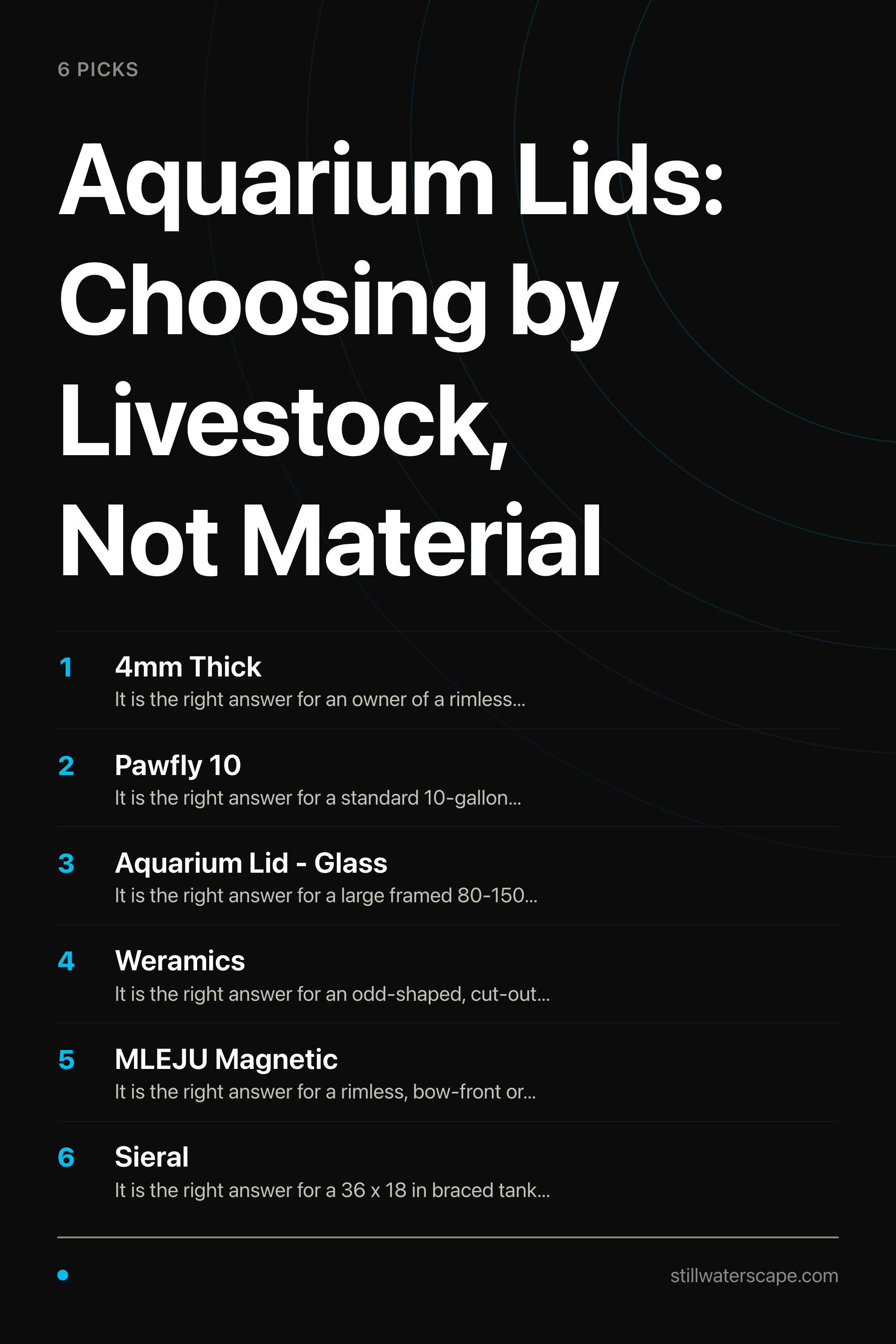
Aquarium Lids: Choosing by Livestock, Not Material
Heat buildup, poor gas exchange and light loss are faults of the tight glass cover, not of lids generally. Here is how glass, vented acrylic and mesh differ across jump prevention, evaporation, gas exchange and light, and how to choose using your own numbers.
· 13 min read
-
 In depth
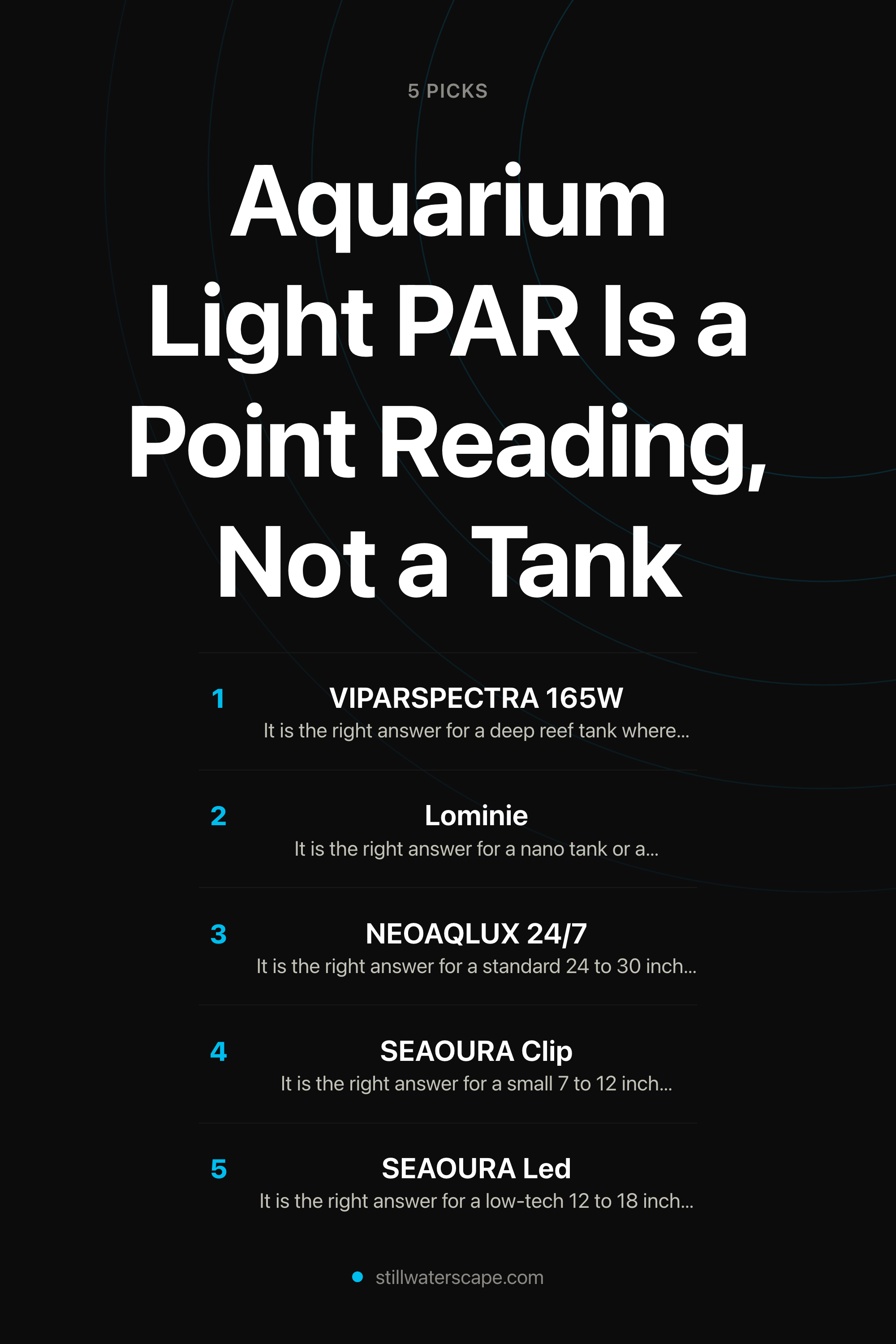
Aquarium Light PAR Is a Point Reading, Not a Tank
PAR targets mean nothing without a stated measurement point and photoperiod. Using published depth readings and the DLI formula, this guide shows how to turn a chart figure into the light your plants actually get.
· 12 min read
-
 In depth
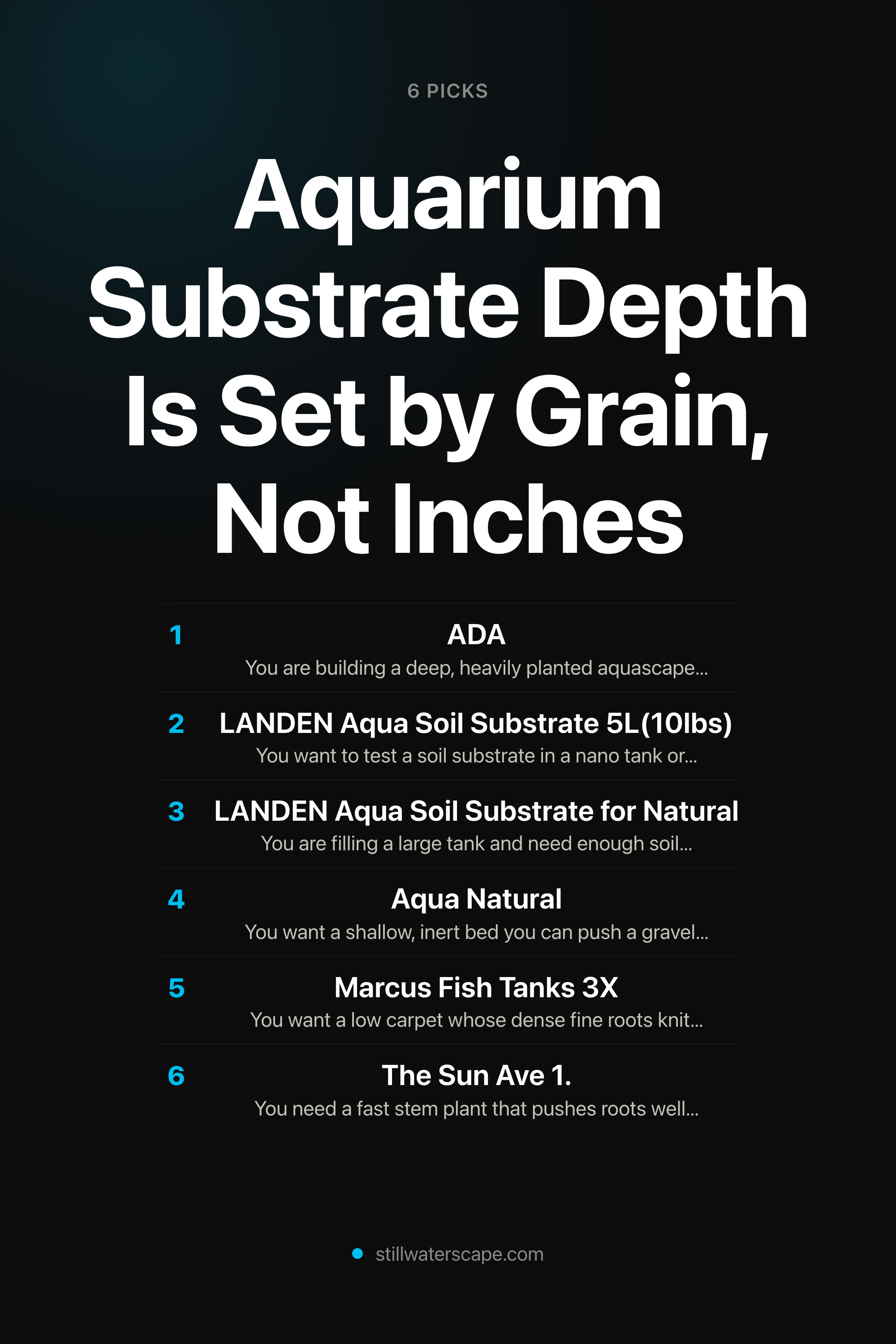
Aquarium Substrate Depth Is Set by Grain, Not Inches
Three inches of sand and three inches of gravel are not the same bed: one sits at its anaerobic ceiling, the other has margin. Grain size and a front-to-back slope resolve the conflict between root depth and gas pockets better than any compromise inch count.
· 14 min read
-
 In depth
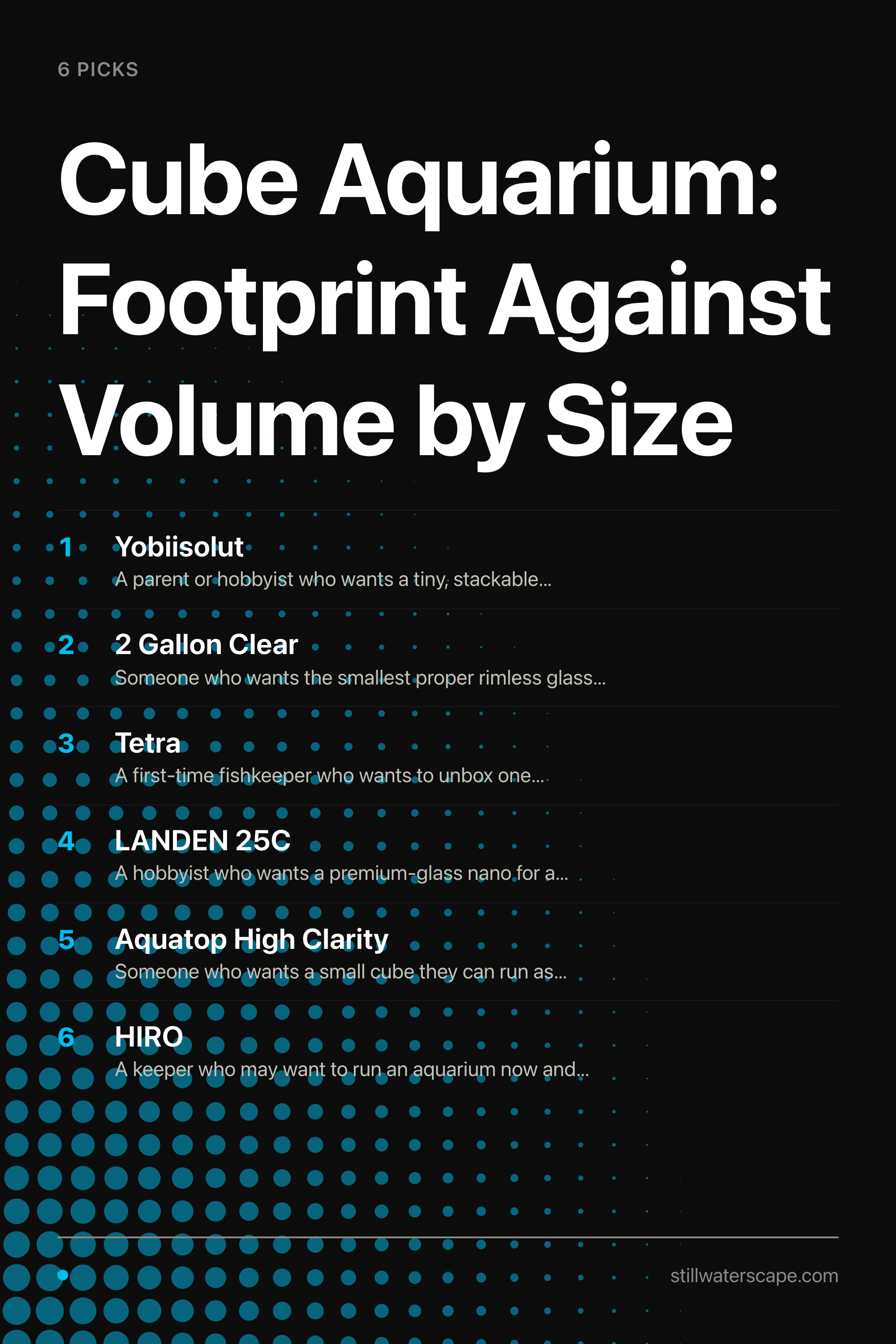
Cube Aquarium: Footprint Against Volume by Size
Cube aquariums claim about twice the footprint of a same-length rectangular tank and return roughly four times the volume. This comparison maps that trade-off at five common sizes, then reviews nine cube tanks from 2 to 15 gallons on weight load, maintenance reach, and what ships in the box.
· 12 min read
-
 In depth
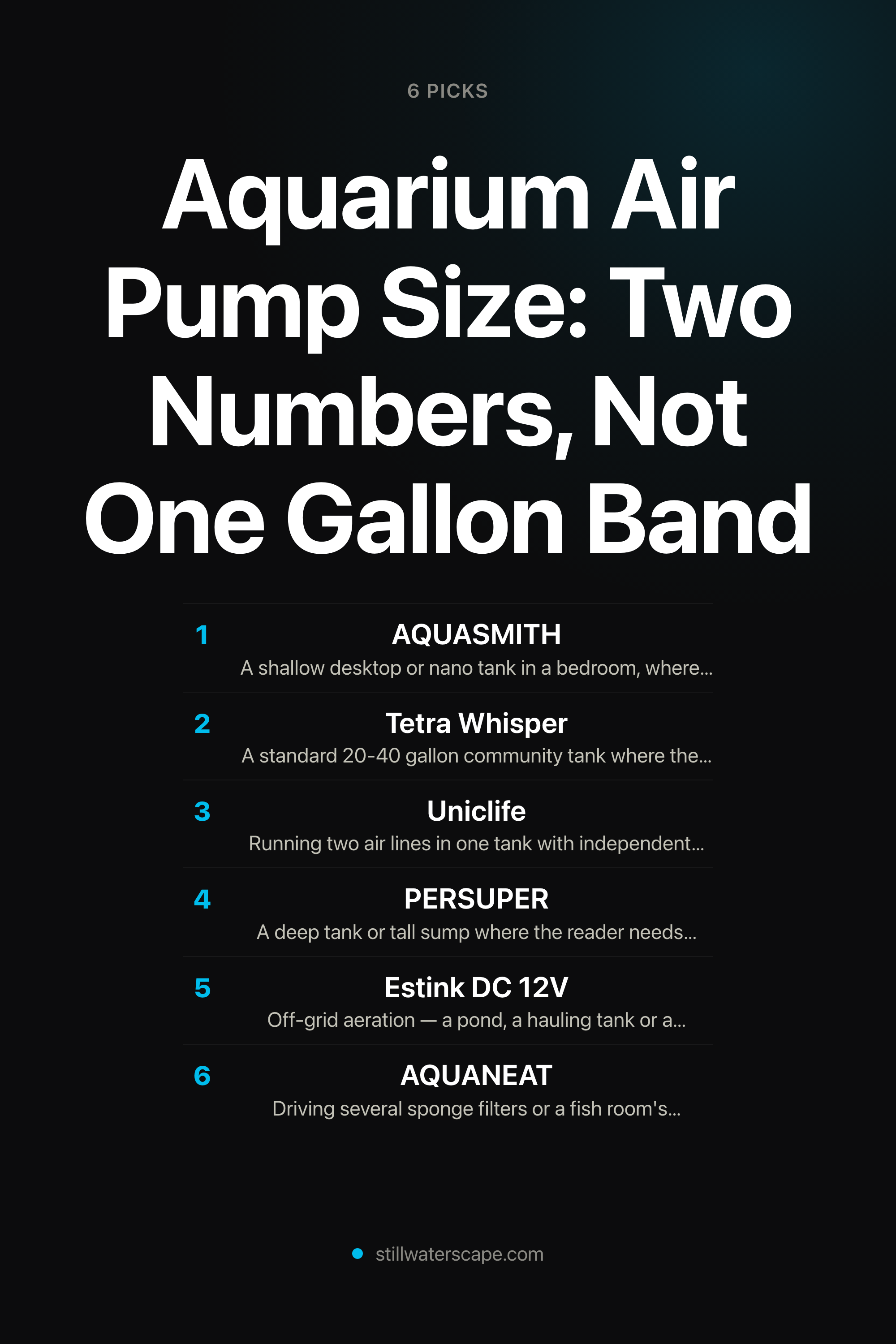
Aquarium Air Pump Size: Two Numbers, Not One Gallon Band
Gallon bands and "20 GPH for 20 gallons" both ignore the one thing that stops an air pump working: the depth it must push air down against. Here's how to size by pressure instead, and why the same 20 gallons in three shapes needs three pumps.
· 12 min read
-
 In depth
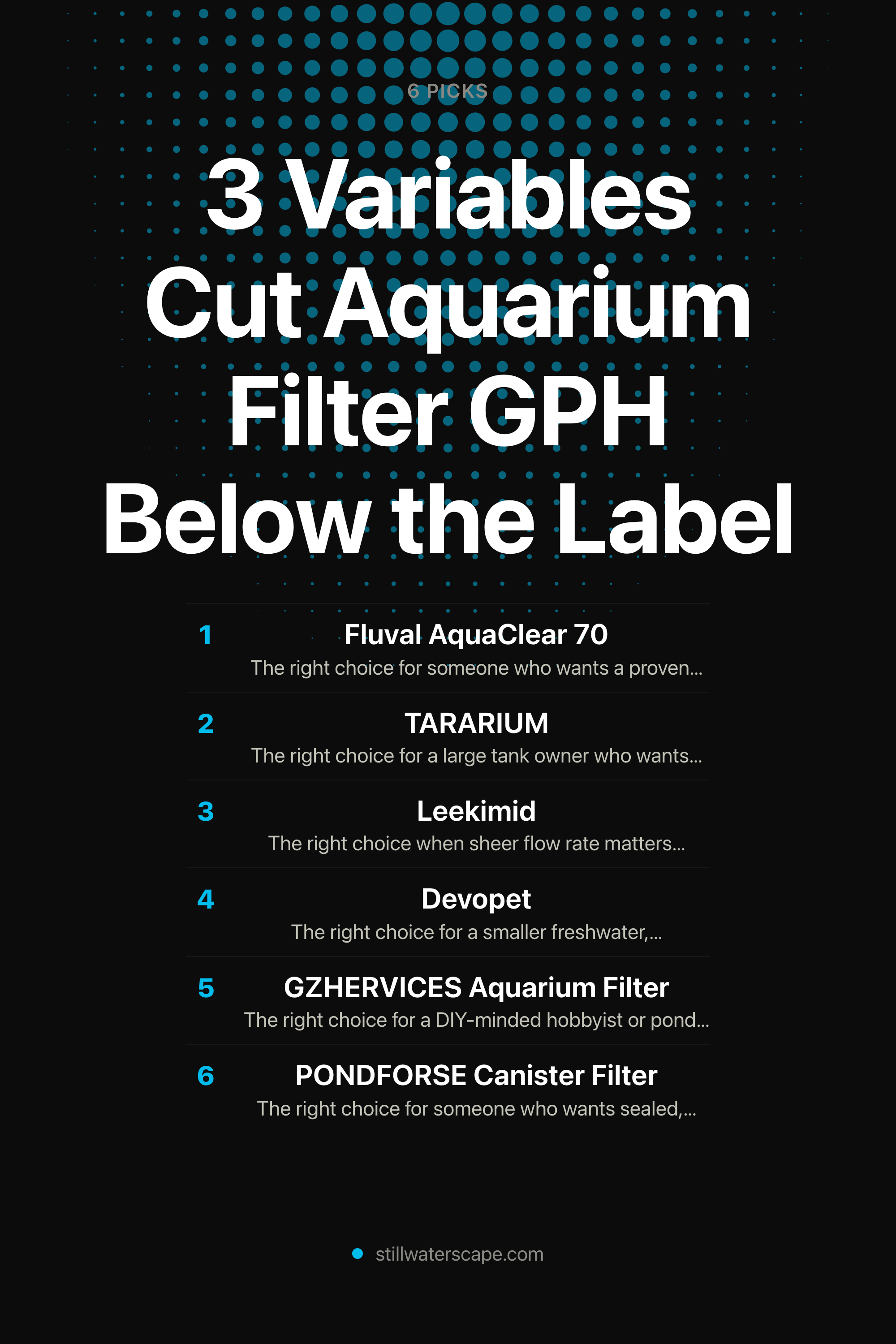
3 Variables Cut Aquarium Filter GPH Below the Label
The GPH on a filter's box is a best-case number. Media resistance, head pressure, and bioload push the real turnover rate well below the rating, and a single 4× multiplier only fits lightly stocked community tanks. This guide shows how to calculate the post-media flow your tank actually receives.
· 11 min read
-
 In depth
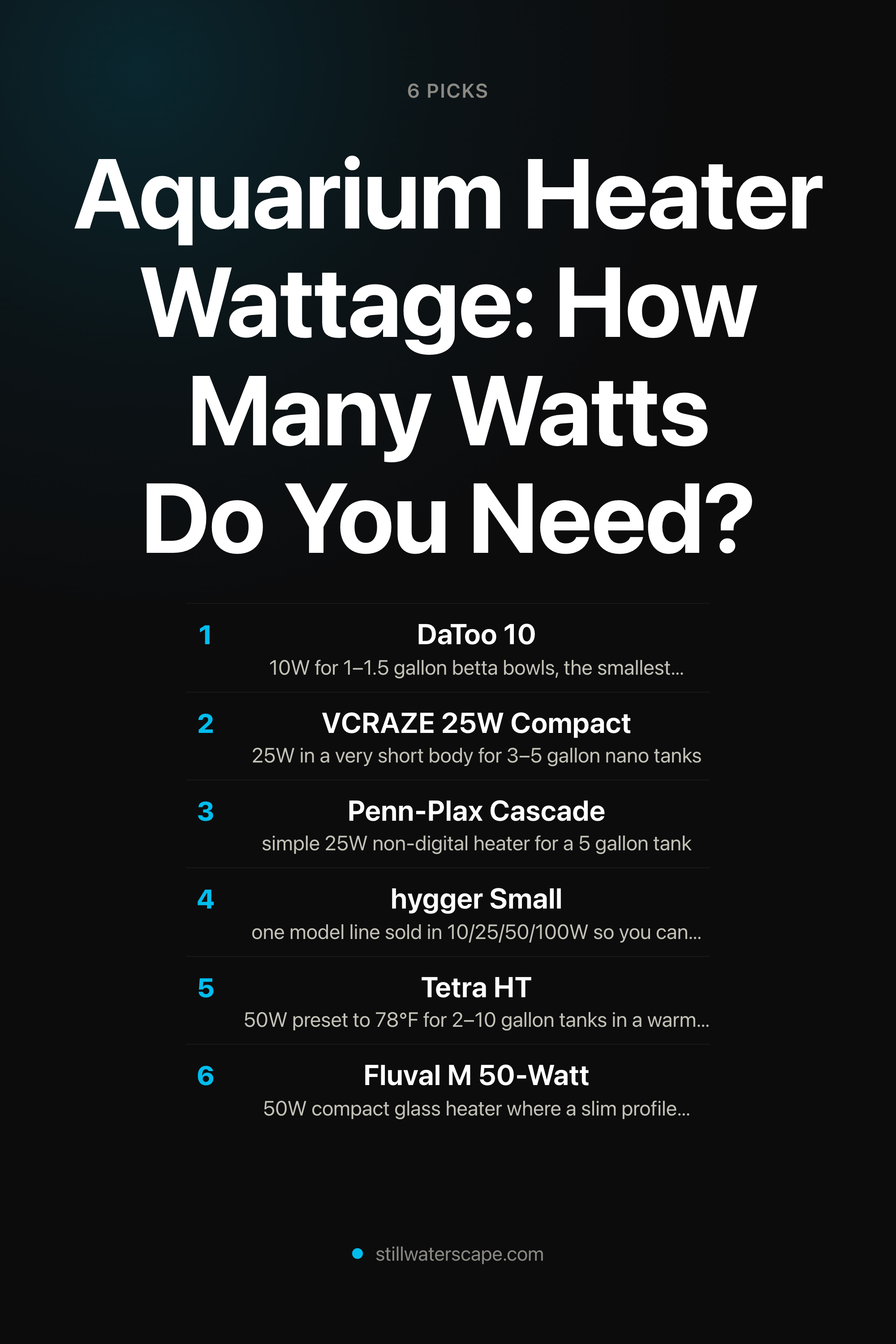
Aquarium Heater Wattage: How Many Watts Do You Need?
Three sellers size the same 30-gallon tank at 75W, 100W and 150W. The difference is room temperature — and the per-gallon rule only holds under a 10-degree rise with a lid on.
· 12 min read
-
 In depth
Aquarium Stand Weight Capacity: How Much Can It Hold?
Gallon-based weight tables disagree by 25 lbs on a 55-gallon tank because they use different water constants. Here's how to build a load figure for your specific setup — substrate, hardscape, sump, lid — and why contact, flatness and floor support matter more than clearing the rated number.
· 12 min read